ArchivesElectroacoustic

PLEYADE

Pleyade is a word that comes from Latin for a group of people who are outstanding in an activity that is usually artistic. In Greek mythology, Las Pléyades were seven sisters who metamorphosed into doves and then became stars. The constellation bearing this name is also known as the Seven Sisters or the Seven Goats. The name Pléyades also refers to a group of seven Alexandrian tragic poets of the 4th-3rd centuries BC and in France, during the Renaissance, to another group of prominent poets.

Now, Pléyade is also this album that compiles acousmatic and electroacoustic works, a sound poem and soundscapes created with different composition and elaboration techniques. All of them are the result of creative processes carried out by their authors and accompanied in the space of the Taller de Música y Arte Sonoro directed by Pablo Bas, which are here embodied in works that, like spiralling circles, we hope will be fed back to the public who listen to them.

Pablo Bas.


CREDITS:

Mastering: it was carried out in two stages. The first part in Pablo Bas’ studio and then in the Laboratorio de Investigación y Producción Musical del Centro Cultural Recoleta [LIPM CCR] with Gabriel Lucena as technician and the support of FMyT [Fundación Música y Tecnología].

Cover image: Francisco Bas.


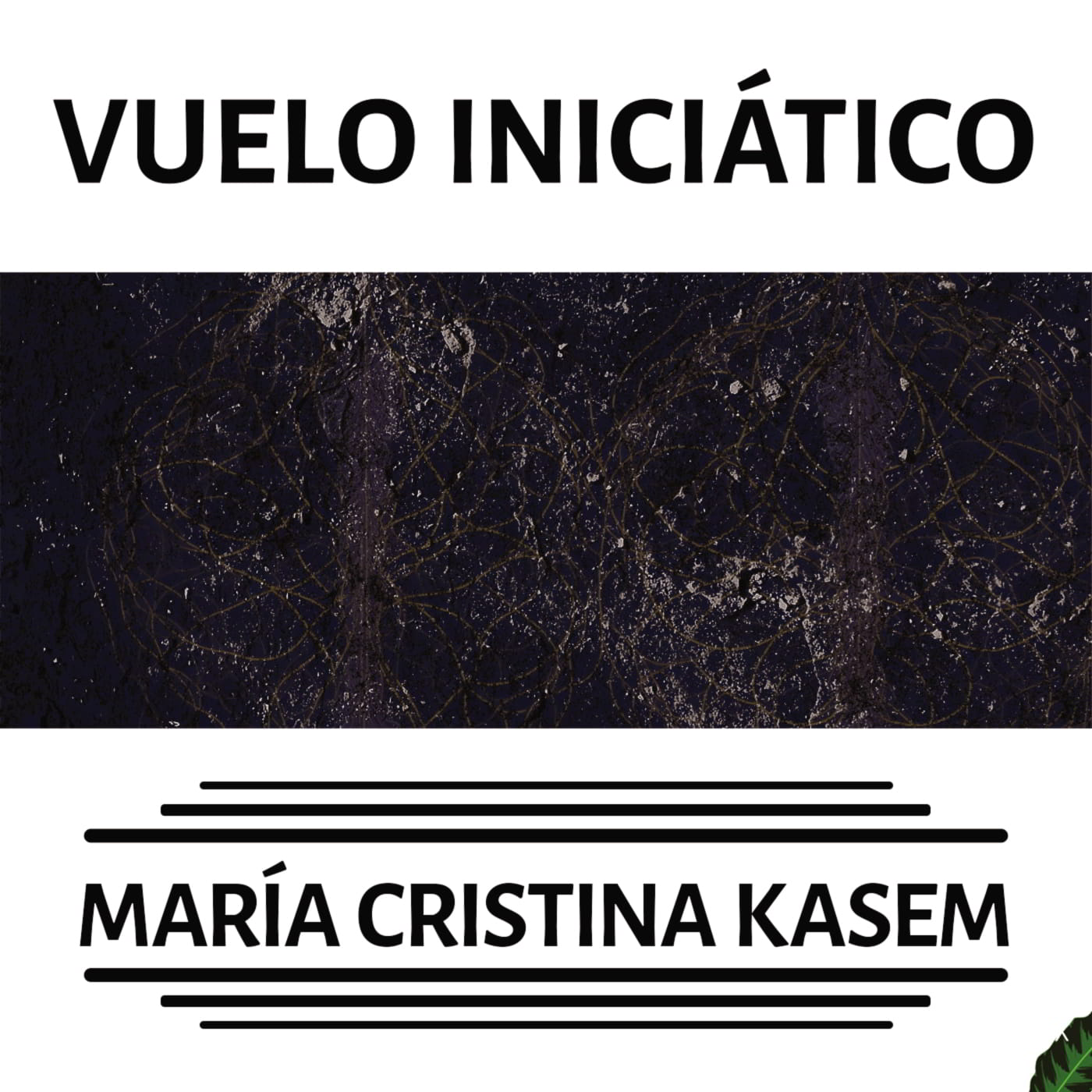
Initiatory Flight (Vuelo Iniciático)

The first two pieces are pure electroacoustic, while Pacha Mama is a mixed piece for male and female voice, together with various instruments and percussions. The electroacoustic supports of the three pieces were composed and realised at the Studio du Nord of the University Lille III.

While lvy Mara He’y is the piece that complements this selection of works by the artist, which was awarded an Honourable Mention at the SONOM International Competition in Monterrey, Mexico in 2013.

Vuelo Iniciático (Initiatory Flight) is musically inspired by the rites and legends of the toba theogony, evoking the initiatory journey of the sorcerer, who, transformed into an eagle, flies over the three cosmological strata of the world. The waters, the heavens and the earth represent the three emanations of the same truth, a knowledge declined three times —like the truths of the Emerald Tablet of Hermes Trismegistus— thus indicating the parallel and interacting presence of the physical, psychic and astral world.


About the Works

Las Aguas Abismales (2008)

1st prize in the International Competition IMEB Bourges/France 2009.

The beginning of the triptych is an invocation, introducing the voice of a Toba sorceress recounting the origins of the world. This first piece takes the form of a melody with accompaniment, and the composition is produced, similarly to Eimert’s Epitaph, from the loss and recovery of the semantic recognition of voice and text. In addition to the voice, the piece uses as sources a series of instruments from the Toba tradition (flutes, quenas, erkes, rainsticks, drums, etc.) as well as some instruments from Western music (flute, various percussions). All these sound sources were recorded and transformed through various electroacoustic study techniques: resonance filters and spectrum attenuation, shuffling, sound stretching, speed and pitch changes, etc.

The piece will find its formal resolution through the magical summoning of water.

It is in the abysmal depths of the water that the traveller on the Tufa initiatory path confronts the demons of hell. From this struggle, if he emerges victorious, he will gain the wealth of knowledge; this combat with the beings of the aquatic underworld is necessary because it is what ends and begins the eternal cycle of life.

Los Cielos Infinitos (2010)

In contrast to the dynamism and the lively and restless character of Las aguas abismales, the second piece of the triptych is an interlude characterised by the re-exploitation of the sound materials used in a frankly static and meditative context. Los cielos infinitos is a grave and solemn piece, evoking the atmosphere of a prayer. The voice of the sorceress reappears sporadically, recalling the narrative element, the backbone of the triptych as a whole. As a preponderant figure we find the presentation of the ocarina, an instrument that develops a series of melodic figures in glissando.

Pacha Mama (2011)

Work selected to represent Argentina at the UNESCO International Composers’ ROSTRUM in Finland 2014.

Pacha Mama is the embodiment of the electro-acoustic source in performers, which is realised taking into account that the ultimate state of the Toba initiation is the transformation into another being, another person than the man of knowledge.

The piece is conceived for two amplified solo voices (female: the sorceress, male: the initiate), ocarina, indigenous flute, Tibetan singing bowl, various percussions and octophonic electroacoustic support.

The voices of the two performers perform part of the repertoire contained in the electroacoustic medium, producing a varied counterpoint with it. To this are added individual actions not contained in the electroacoustic medium, for example:

  • Mongolian diphonic singing,
  • Ultra high-pitched falsetto,
  • The recitation.

Ivy Mara He’y (2012)

While lvy Mara He’y is the piece that complements this selection of works by the artist, which received an Honourable Mention in the SONOM international competition in Monterrey, Mexico in 2013.

The title of the work, in the Guaraní language, means The Land Without Evil, the lost paradise of the native peoples of Paraguay, Brazil and Argentina. The work is an invocation, a shamanic rite to protect mother earth.


CREDITS

Composed, produced and performed by María Cristina Kasem.
Mastering: CALATHEA Experimenta
www.calathea.ar
experimenta@calathea.ar


Digital FINGERPRINTS (HUELLAS Digitales)


It is possible that one of the keys to the act of creation is to grasp what there is in common between elements of the world that at first sight —or at first listening— are unrelated. To grasp the link between elements where before, apparently, there was no link constitutes a restructuring of the perception of that very world in which things were found. Levi Strauss in his book “Savage Thinking” posited the differences between the do-it-yourselfer and the engineer and drew an analogy with the differences between mythical and rational thinking. In mythical thinking —as in that of the bricoleur— elements are taken and isolated from their contexts and reconfigured into a new one. In rational thinking —as in that of the engineer— a project is proposed and the starting point is raw materials. The same thing that happens with bricolage happens with the concrete music invented by Pierre Schaeffer, one starts from sound structures taken from “reality” and puts them in dance to create a discourse. The works on this album are based on this intention: to enrich our perception of the world and perhaps, in this very act, to expand our openness to it.

On the other hand, these works —made in the 21st century— constitute a late revival of mid-20th century musique concrète. The advent of the personal computer has made the creation of musique concrète more accessible. The ease with which sound material can be manipulated and transformed opens up the possibility of attending to the material aspects of sound and the formal dimensions of the work without major inconvenience.

These works were constructed with simple sound editing software. Almost all the materials are fragments of recorded sounds and, to a lesser extent, cuttings of other music. Also, very few processes were applied: the material is hardly modified, the richness of the original sound is preserved. If it is not easy to identify the source in what you hear, it is mostly due to the overlapping and juxtaposition of the materials.

Another of the intentions behind the composition of this selection of works is the articulatory processes. The form of these works is the result of the articulations and the different operations they involve.

Miniatura Concreta N° 1.

For electroacoustic media (2003). It was premiered on August 16, 2003, at the Teatro Municipal Gregorio de Laferrere in Morón. It is the author’s first electroacoustic work. It has a symphonic character —it seems to imitate an orchestra— and consists of two parts where the second is a variant of the first.

Gígnomai.

For electroacoustic media (2004). Premiered on March 6th 2004 at the Auditorium of the Escuela Superior de Música de la Provincia de Misiones, Posadas. Ciclo Otras Músicas II, Museo de Arte Contemporáneo de la UnaM. It was designated as a “Recommended Work” in 2004 in the competition co-organised by FARME and Radio Nacional Clásica and also selected in the international competition organised by the Destellos Foundation, 2013 edition. It is a programmatic work, narrating the passage from the arid, uninhabited to the human expressed by the choral voices at the end.

Electroacoustic Guilt. Para medios electroacústicos (2011)

Finalist in the International Electroacoustic Music Competition at the Destellos Foundation, 2012 edition. It is a rhapsodic work. It consists of six parts. Each part is static, the movement is created from the displacement of its elements.

Reflujo de lago en el río. Para medios electroacústicos (2016-2017)

Premiered on 3 March 2017 as part of the seventh edition of Nuevas músicas por la memoria: Teatro Margarita Xirgu/Untref. The idea of this work is the non-resolution of tension. Things do not end up being resolved and through a “reflux” they return to the process of growing tension.


CREDITS:

Composed, performed and produced by Claudio Gabriel Eiriz.
Mastering: CALATHEA Experimenta
www.calathea.ar
experimenta@calathea.ar