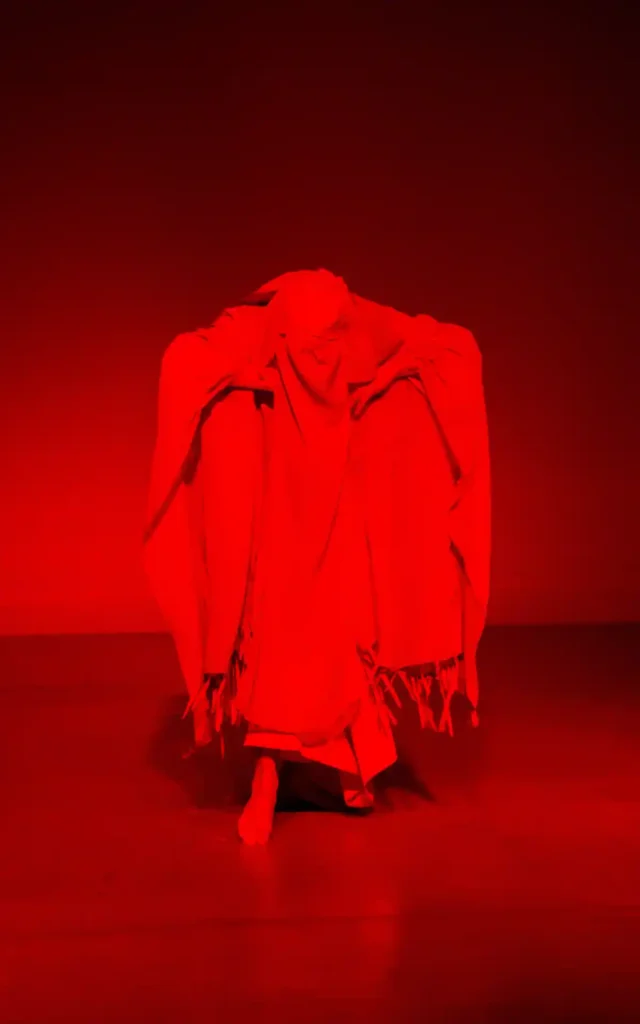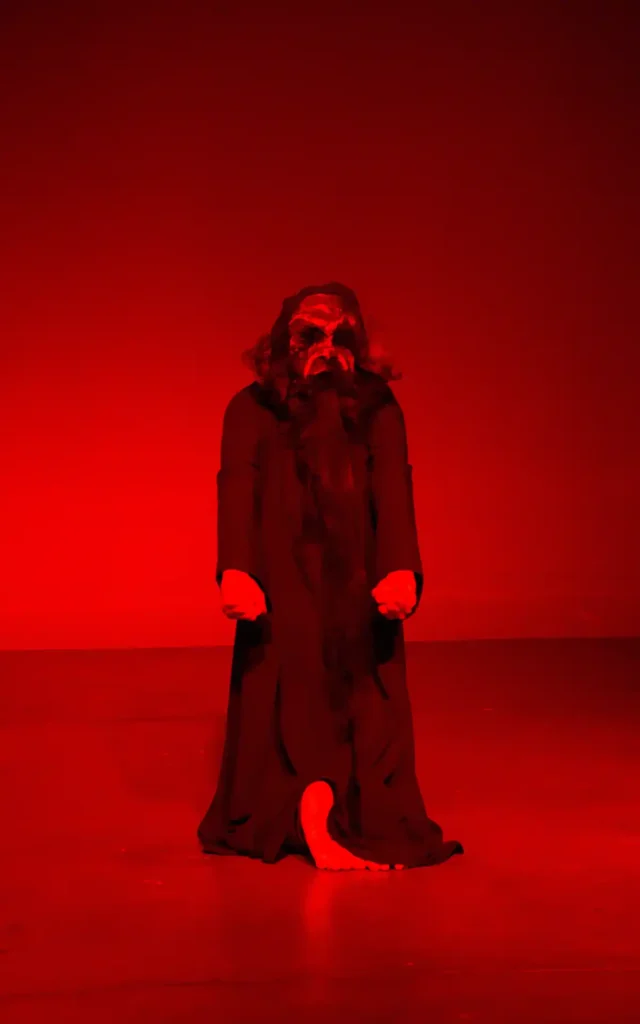

Cosmos Qalítico is a work in five movements titled “Inhabiting the Trace of Silence” (2023). Through the voice, it explores the symbolic meanings of concepts such as noise/silence, time/eternity, being/non-being.
Formally narrated through an artistic language —the Qalítico— it constructs atmospheres of unintelligible sounds, breaths sculpted in space that brush against a plastic musicality. Its five movements describe the vicissitudes of a being rescued from the city of Noise: first indistinguishable from it, then separating, guided by an external voice, recognizing its silence, and finally communing with Silence.
In its sonic complexity —plastic, consonantal, overtone-rich, guttural, whistled— Qalítico reflects on the limits faced by the human being in a rapidly changing world. The voice signifies personhood, and no noise should cover it.
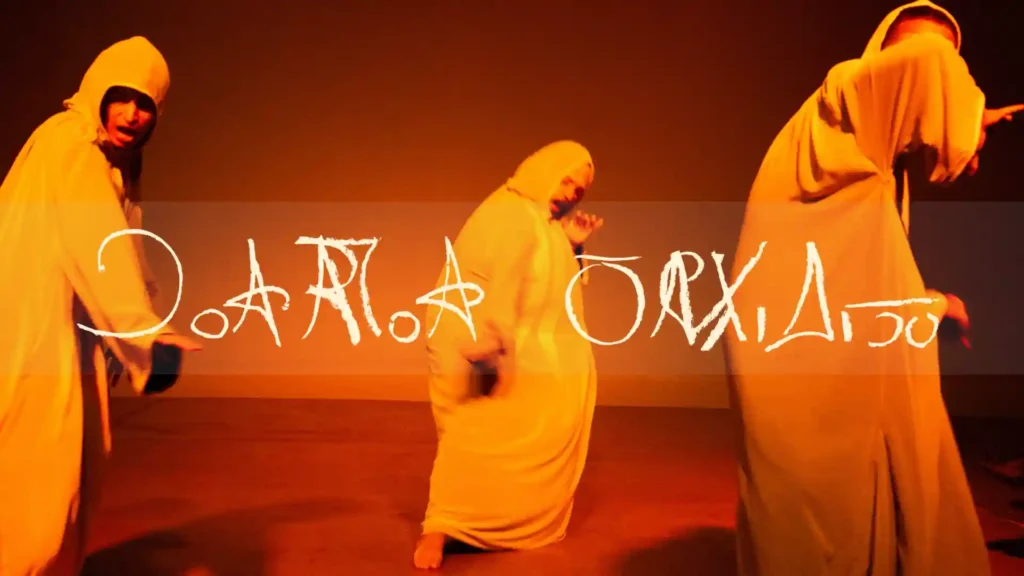
The album also includes individual variations where composition plays with the same voice. Cosmos Qalítico evokes a mythical-fictional cosmogony, addressing the human journey inward, through characters born of an internal/external dialogue, confronting the unease of spiritual transcendence.
Conceptually, it proposes distinguishing one’s own voice from invasive noise —echoes of lost, demonic voices reverberating in memory, producing torment before dissipating. Once the inner journey begins, the redeeming song emerges.
The voice, in its tending toward Silence, has passed through the scream, has ordered itself into sound, and intuits the extension of inextricable Silence. The hysterical scream has sought to condemn the voice, creating laws to prevent the division of tongues —those not understood, not counted, not consensual, those that converse with mystery. What does the “world” truly fear? That voice has emerged from listening to an inner call.

During the creation and production process, artists familiarized themselves with the sonic texts translated from Spanish. Participants from disciplines such as visual arts, dance, theater, and literature incorporated the sounds in a practice lasting three to six months, memorizing tonalities, textures, and consonantal plasticity of Qalítico —first for public performance, then for studio recording.
ROMMEL HERVEZ, 2026